
Why preventive care matters
Most dead pallet jacks start with ignored water levels.
When no one is checking water levels or logging voltage, weak batteries stay in service until the floor feels it. Then the customer pays for batteries, labor, and lost equipment availability all at once.
Replacement costs stack fast
One battery can cost $150+ before labor. A pallet jack may use four batteries at once.
Downtime hurts twice
Teams lose working equipment and still have to wait on sourcing or emergency service.
History creates leverage
Dated readings and watering logs give operators proof, planning visibility, and accountability.
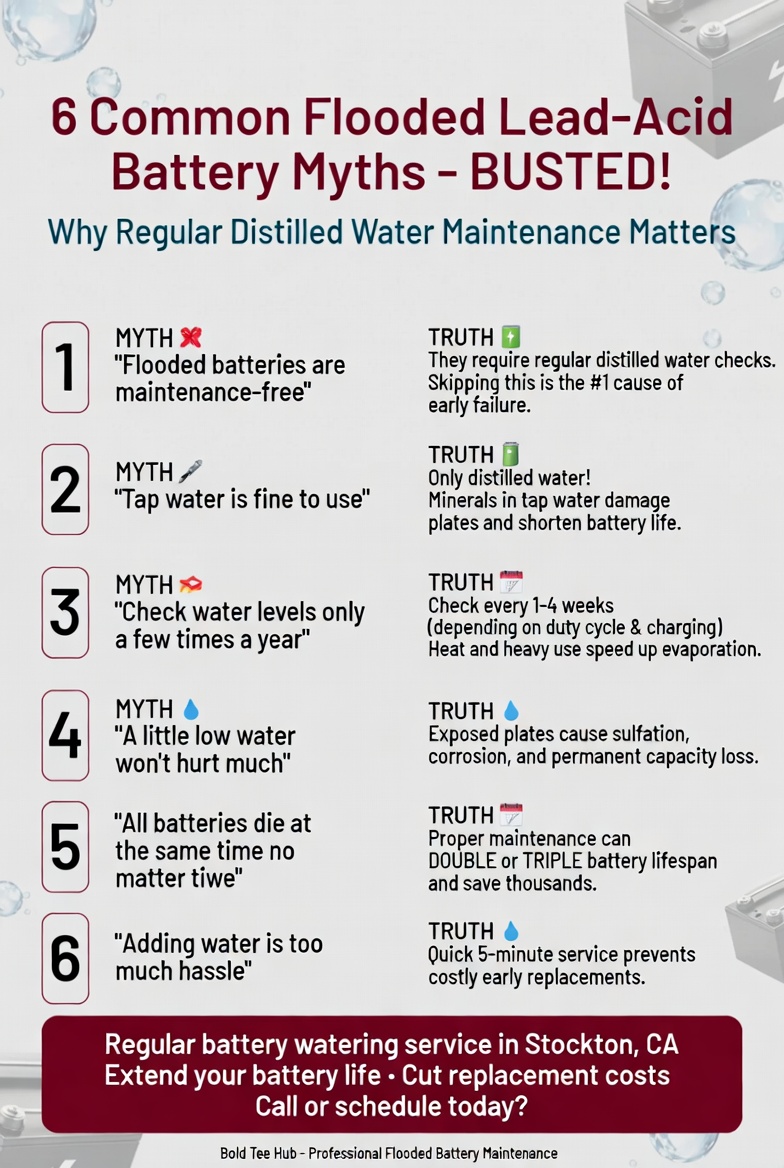
Common misconceptions
A lot of customers are making expensive decisions based on bad battery advice.
We hear the same myths over and over: that flooded batteries are maintenance-free, that tap water is fine, or that low water is not a big deal. Those assumptions are exactly what lead to weak cells, short battery life, and pallet jacks dropping out of service.
- Flooded lead-acid batteries need regular distilled water checks
- Tap water adds minerals that damage plates and shorten lifespan
- Watering intervals depend on charging cycle, heat, and workload
- Low water causes sulfation, corrosion, and permanent capacity loss
- A quick recurring service visit can prevent costly early replacement